

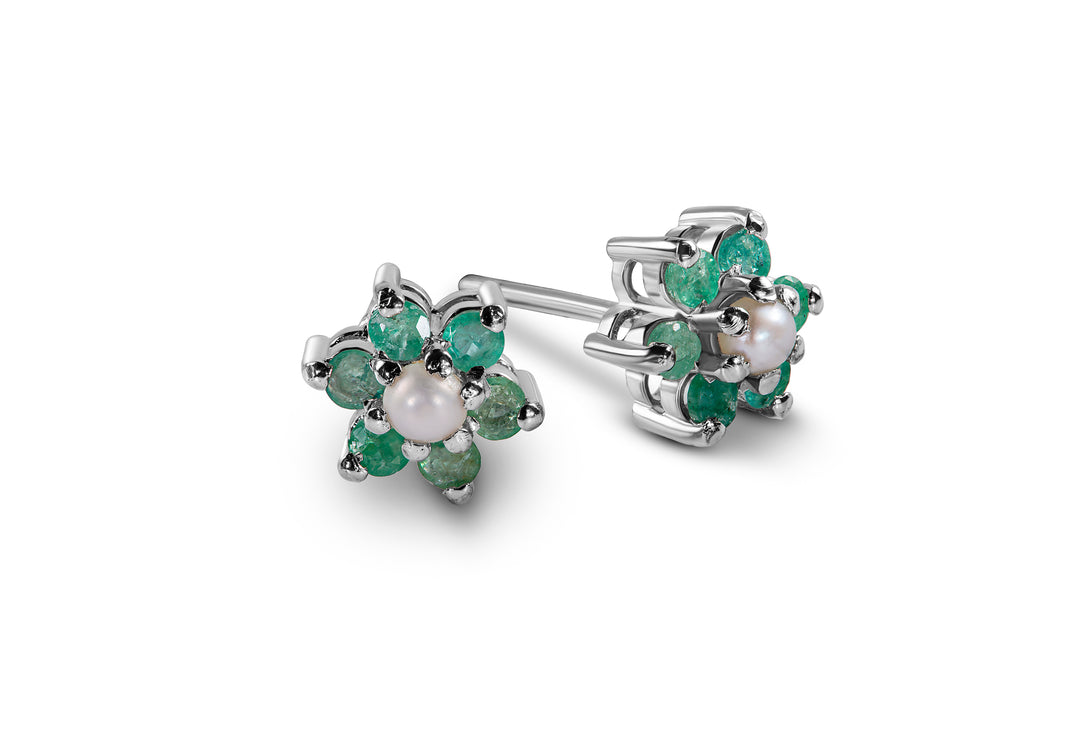


Stone of Successful Love — Natural Emerald & Pearl Studs, Sterling Silver
Natural Emerald & Pearl
Genuine gemstone, not glass or synthetic

925 Sterling Silver
Solid sterling silver, not plated base metal
"STONE OF SUCCESSFUL LOVE STUDS"
Inspired by the nature, Zanvari Florae designs apprehend the beauty of flowers with a mix of natural pearls. Finely crafted by our craftsman to make you look elegant in every event. This design has an ageless charm and refinement.
- Embedded with Natural Emerald and Pearl.
- Handcrafted in pure 925 sterling silver with Rhodium plating.
- Emerald 2.5-2.75 mm light to dark green
- Inclusions and Blemishes(Internal)&(External) features are the traits of natural stones, it will not be flawless
- Pearl 3mm
Made-to-order: This means the items are not pre-produced and are instead assembled or crafted after a customer places an order.
10-12 BUSINESS DAYS: This is the typical turnaround time for most items. Business days exclude weekends and holidays. So, if you order on a Friday, the 12-day clock wouldn't typically start until the following Monday.
ENGRAVING/CUSTOMISATION: If you opt for engraving 2000 deposit is necessary & the return/refund policy will not apply to it, so make sure to give accurate size.
DELIVERY TIME: Every piece is made to order. Once dispatched, your parcel is insured and fully tracked — every order gets a live track.zanvari.com link.
Multiple Items: It requires more time(will be given in the confirmation message)
At Zanvari, we offer a 30-day exchange policy for all non-customized articles.
If something isn't quite right, simply reach out and we’ll make it right — your satisfaction means everything to us.
Contact us at: 0342 8269771
Be Happy With Us.
At Zanvari, your shine is forever. ✨
We are pleased to offer lifetime free-of-cost replating services for all your Zanvari pieces. Whether it’s white, yellow, goldplating over silver, we’ll restore its original luster—as many times as you need, for life.
Because timeless jewelry deserves timeless care. 💍
Simply reach out to us whenever you feel your piece needs a refresh — we’ll be happy to bring it back to brilliance.
Customer reviews — rated 5.0/5 from 1 verified Loox reviews of this piece:
100% satisfied customer here. It csme out more beautiful that expected

